Updates of THE EPE CHEATSHEET (Plus Edition)
Contact UsOct 2026 Edition | Last updated: 2026-10-03

Table of Contents
Standard
- Update #s1 — Serious Criminality sentence threshold: ≥6 months → >6 months
- Update #s2 — Reporting Change of Info: 30 Days / s.40 → 15 Days / Reg. s.3.1
- Update #s3 — Abuse of Discretion: 3 sub-bullets missing after "such as:"
- Update #s4 — Common Removal Order Situations: FN Overstaying / Non-compliance → Exclusion Order (not Departure Order)
- Update #s5 — Conditional Removal Order: "effective immediately" → comes into force per IRPA s.49(2)
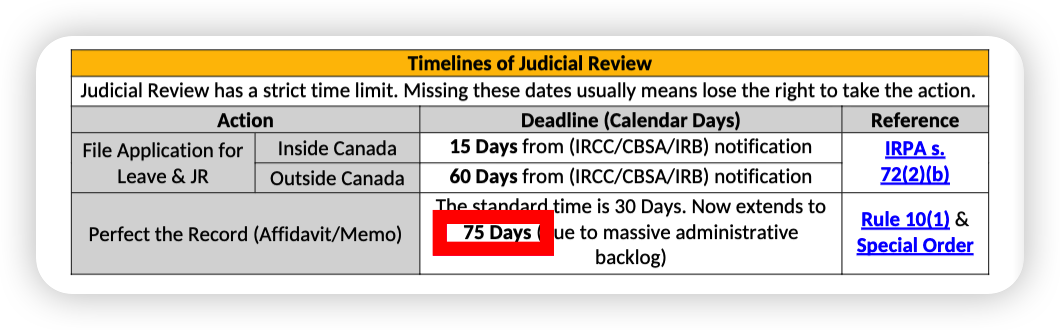
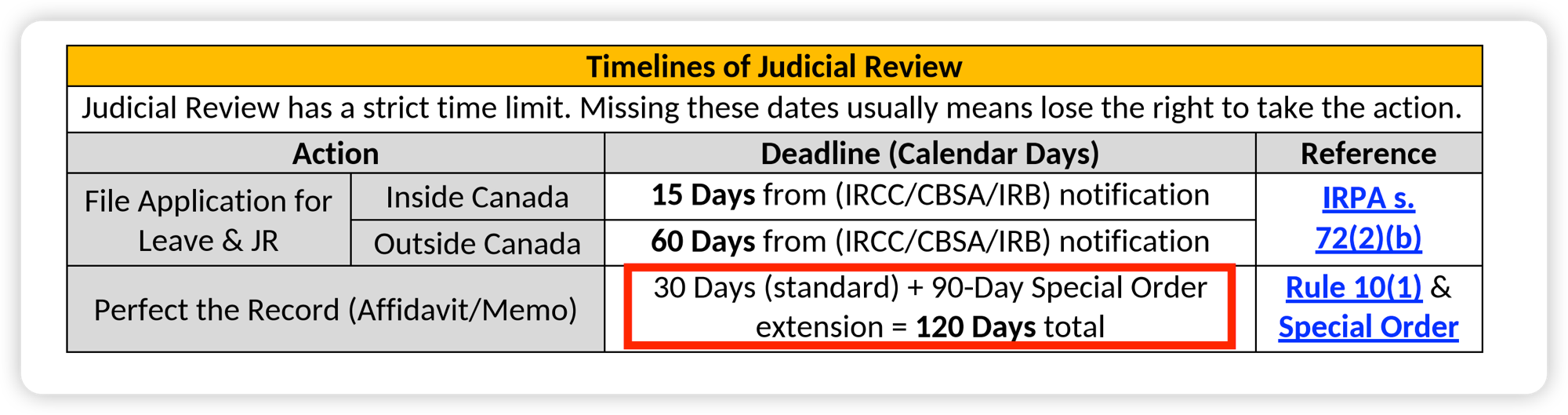
- Update #s6 — Perfect the Record deadline: 75 Days → 120 Days (June 2026 Special Order)
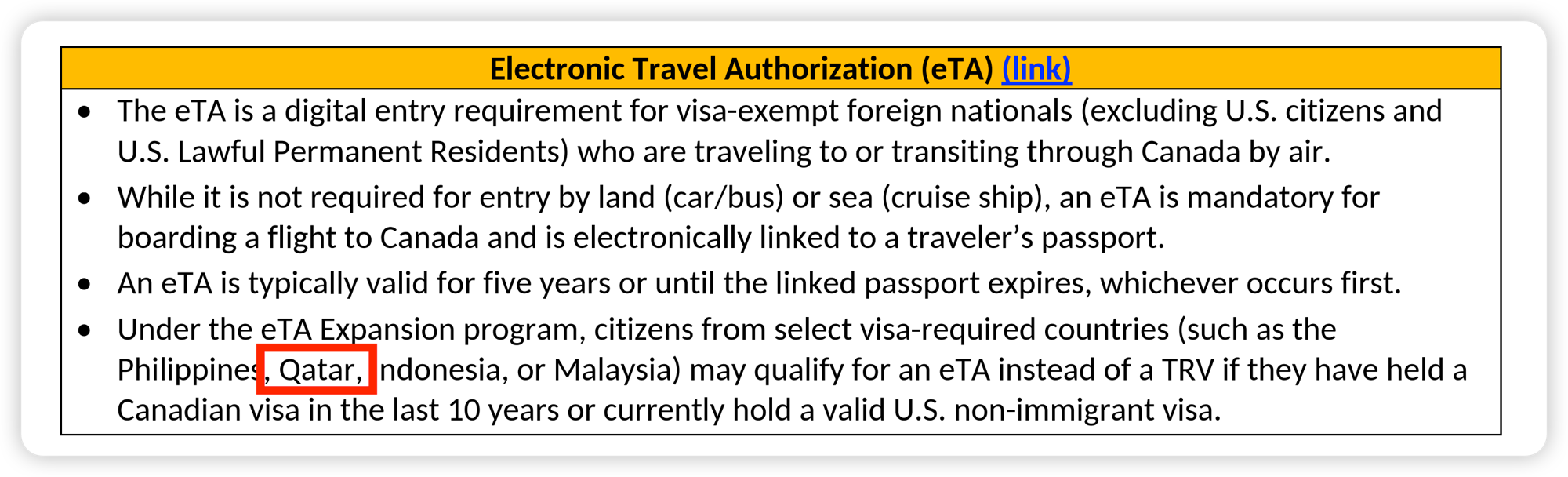
- Update #s7 — eTA Expansion: Remove Qatar from visa-required country examples
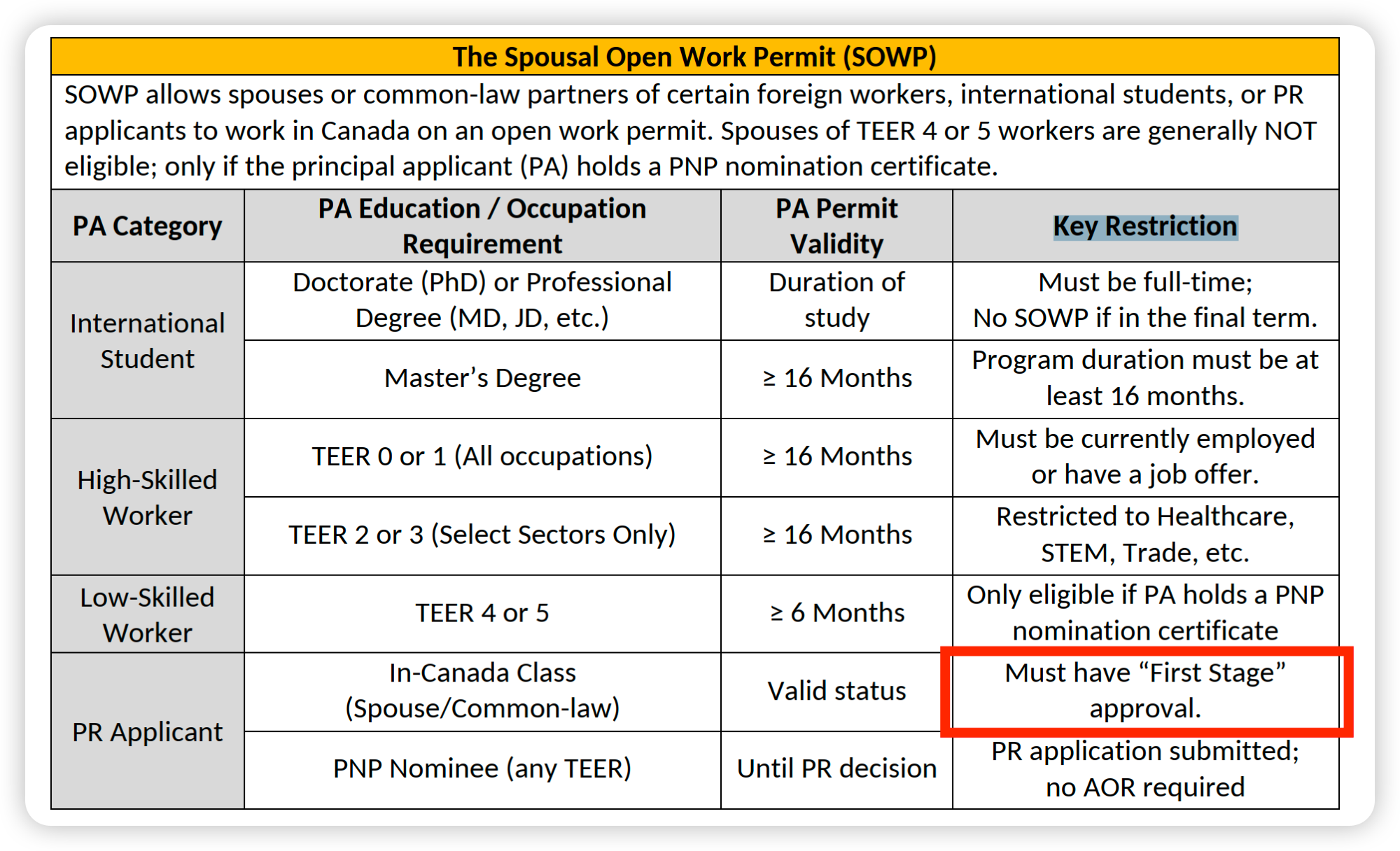
- Update #s8 — SOWP Table: rename "PA" to "Partner"; fix In-Canada Class trigger
Plus Only
Standard Updates
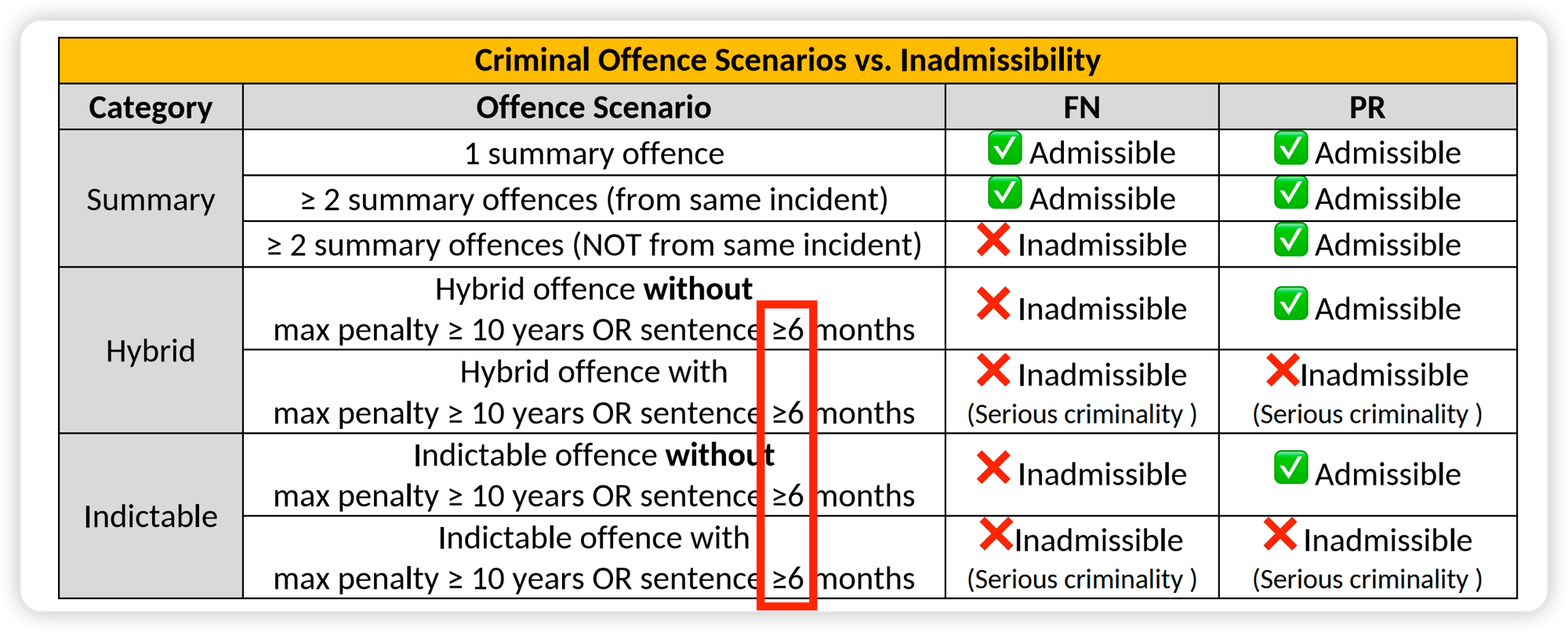
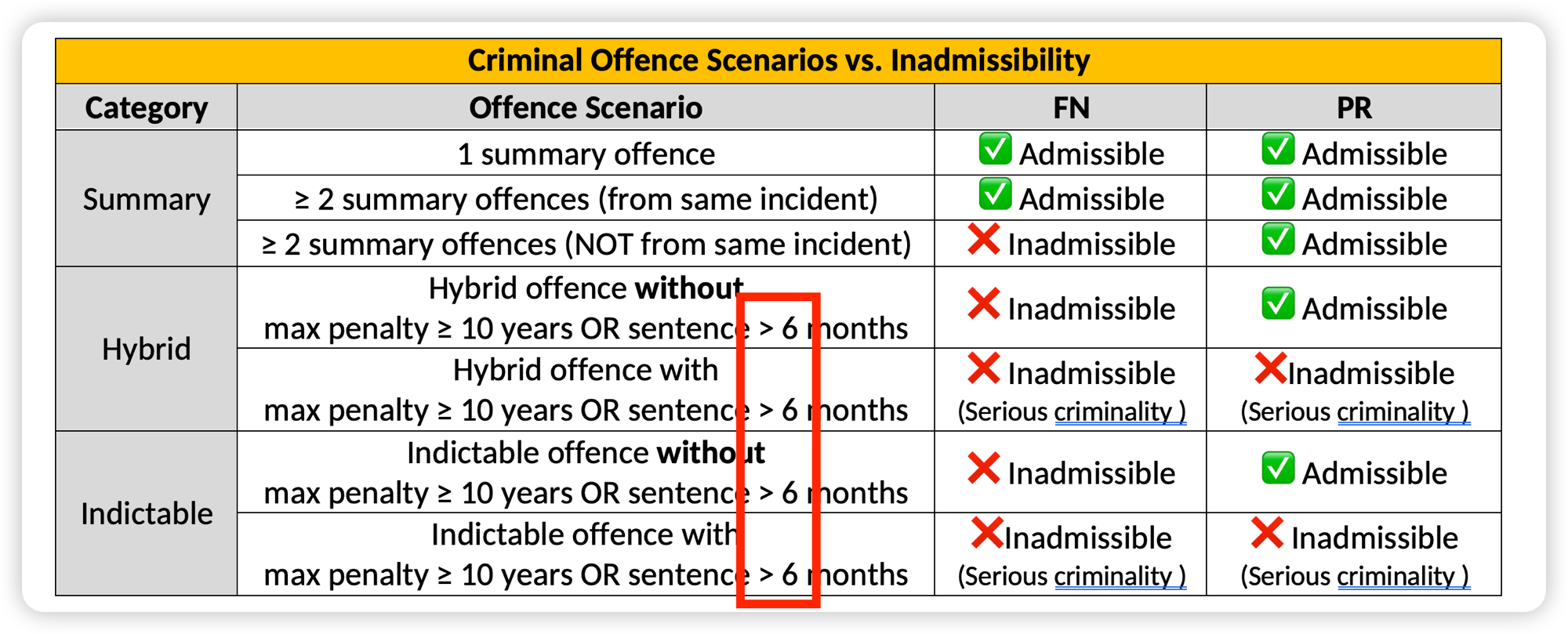
Update #s1 — Serious Criminality sentence threshold: ≥6 months → >6 months
Original Content
Updated Content
Explanation
The term Serious Criminality is used in two distinct contexts in IRPA, and the sentence threshold is very subtly different in each:
| Serious Criminality — Threshold by Context | |||
|---|---|---|---|
| Context | Provision | Sentence threshold (in Canada) | Meaning |
| Inadmissibility | IRPA s. 36(1)(a) | > 6 months | A sentence of exactly 6 months does NOT trigger inadmissibility for serious criminality |
| Loss of IAD appeal right | IRPA s. 64(2) | ≥ 6 months | A sentence of exactly 6 months DOES strip the IAD appeal right |
The key takeaway: A sentence of exactly 6 months sits in the gap — the person is not inadmissible for serious criminality under IRPA s. 36(1)(a), but if they are inadmissible through the other limb (max ≥ 10 years), they also lose their IAD appeal right under IRPA s. 64(2).
| Serious Criminality — Scenario Examples | |||
|---|---|---|---|
| Max penalty | Actual sentence | Inadmissible for Serious Criminality? (IRPA s. 36(1)(a)) | Has IAD Appeal Right? (IRPA s. 64(2)) |
| ≥ 10 yrs | < 6 months (e.g. 3 months) |
✅ Yes (max ≥10 yrs limb) | ✅ Yes (s.64 not triggered) |
| = 6 months exactly | ✅ Yes (max ≥10 yrs limb) | ❌ No (≥6 months, s.64 strips appeal) | |
| > 6 months (e.g. 7 months) |
✅ Yes (both limbs) | ❌ No (≥6 months, s.64 strips appeal) | |
| < 10 yrs | < 6 months (e.g. 3 months) |
❌ No (neither limb met) | N/A (s.64 not engaged) |
| = 6 months exactly | ❌ No (neither limb met) | N/A (s.64 not engaged) | |
| > 6 months (e.g. 7 months) |
✅ Yes (>6 months limb) | ❌ No (≥6 months, s.64 strips appeal) | |
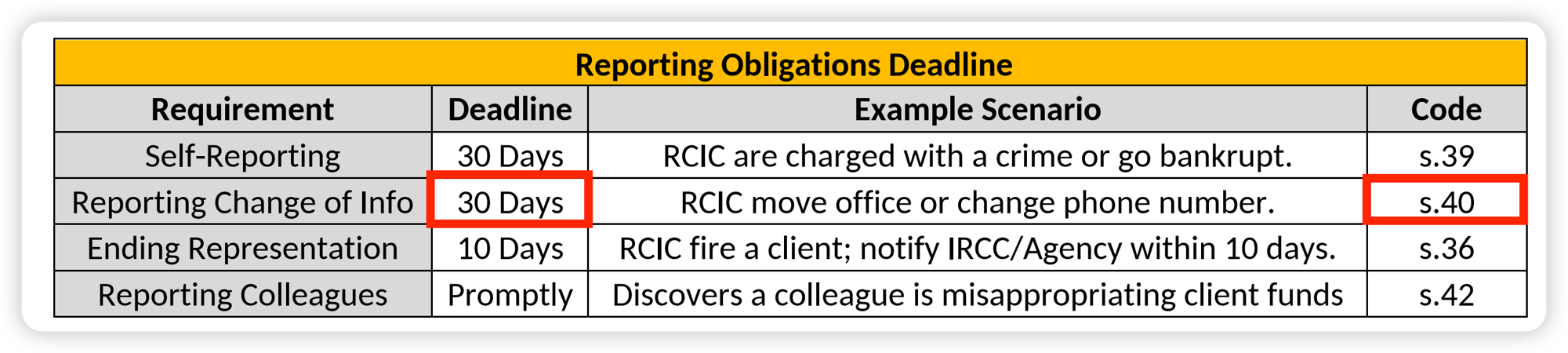
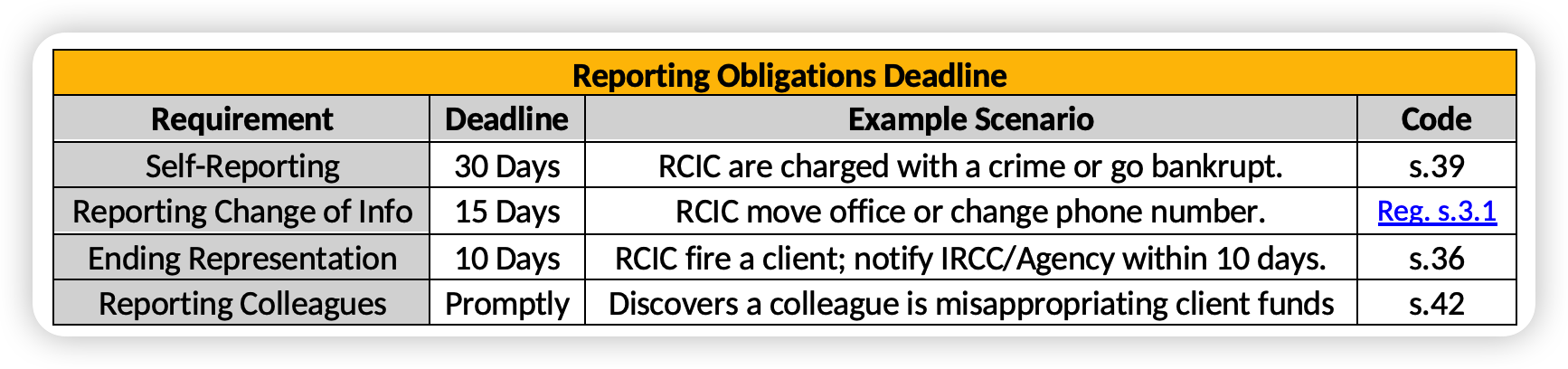
Update #s2 — Reporting Change of Info: 30 Days / s.40 → 15 Days / Reg. s.3.1
Original Content
Updated Content
Explanation
The Reporting Change of Info row in the Reporting Obligations Deadline table has two places that need to be updated:
| Reporting Change of Info — Corrections | ||
|---|---|---|
| Field | Was | Now |
| Deadline | 30 Days | 15 calendar days |
| Code | s.40 (Code of Professional Conduct — "Response to College") | Reg. s.3.1 (Changes in Information Regulation 2021-001) |
The correct authority is Changes in Information Regulation 2021-001, s.3.1, which states: "Every RCIC shall, within fifteen (15) calendar days of an effective change, notify the Council in writing of any changes" to their address, phone number, email, client account details, and more.
Update #s3 — Abuse of Discretion: 3 sub-bullets missing after "such as:"
What Was Missing
In the Abuse of Discretion flashcard, the last bullet reads "…falls outside the 'range of possible, acceptable outcomes', such as:" — but the three sub-bullets that follow were missing from the printed version.
Correct Content
| Abuse of Discretion |
|---|
|
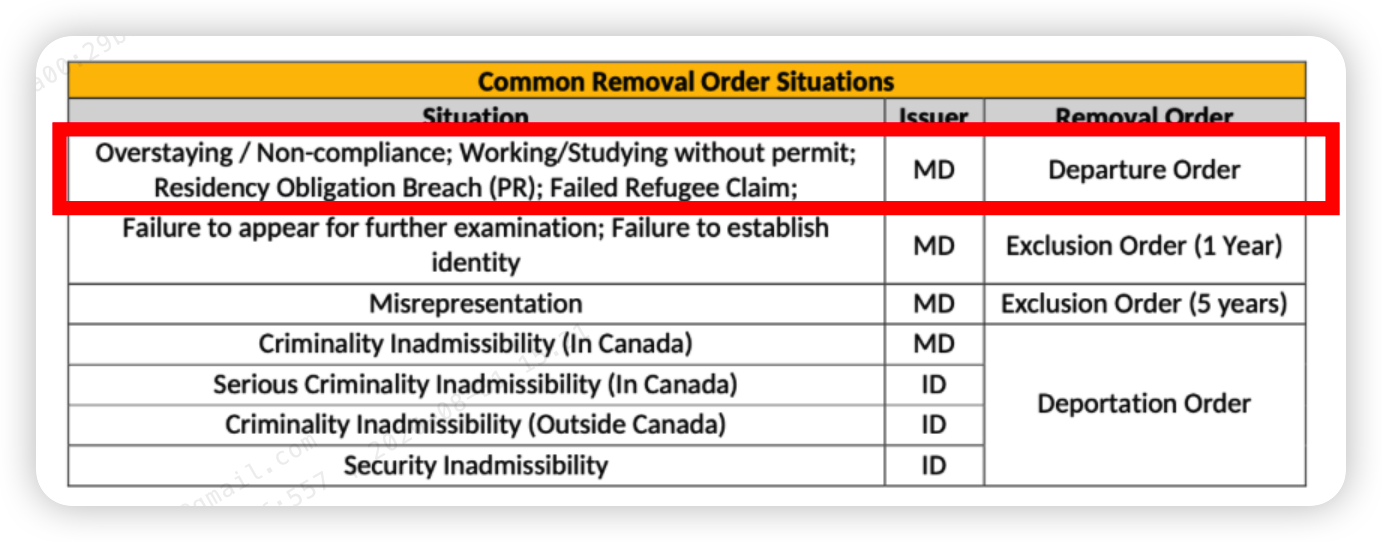
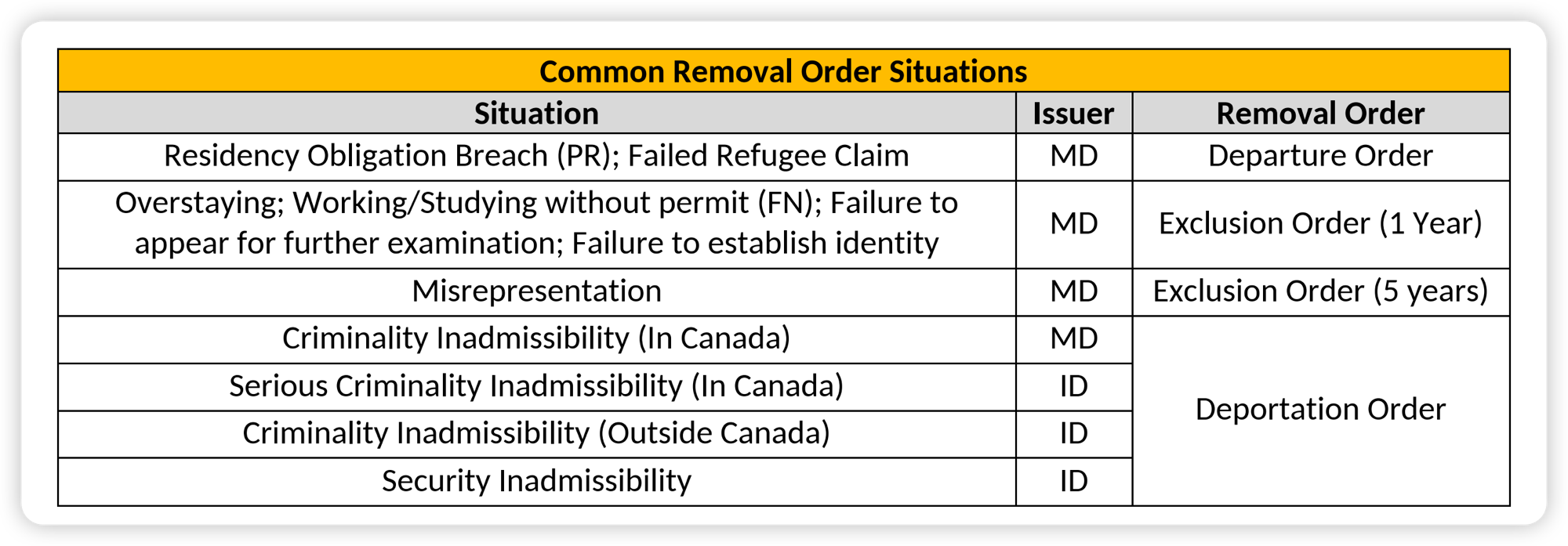
Update #s4 — Common Removal Order Situations: FN Overstaying / Non-compliance → Exclusion Order (not Departure Order)
Original Content
Updated Content
What Changed
The original first row grouped four situations under a single Departure Order. Two of those situations are incorrect for foreign nationals: IRPR 228(1)(c)(iv) specifies an exclusion order for a foreign national who fails to leave Canada by the end of their authorized period (overstaying), and IRPR 228(1)(c)(v) specifies an exclusion order for failing to comply with conditions of temporary residence (including work and study authorization).
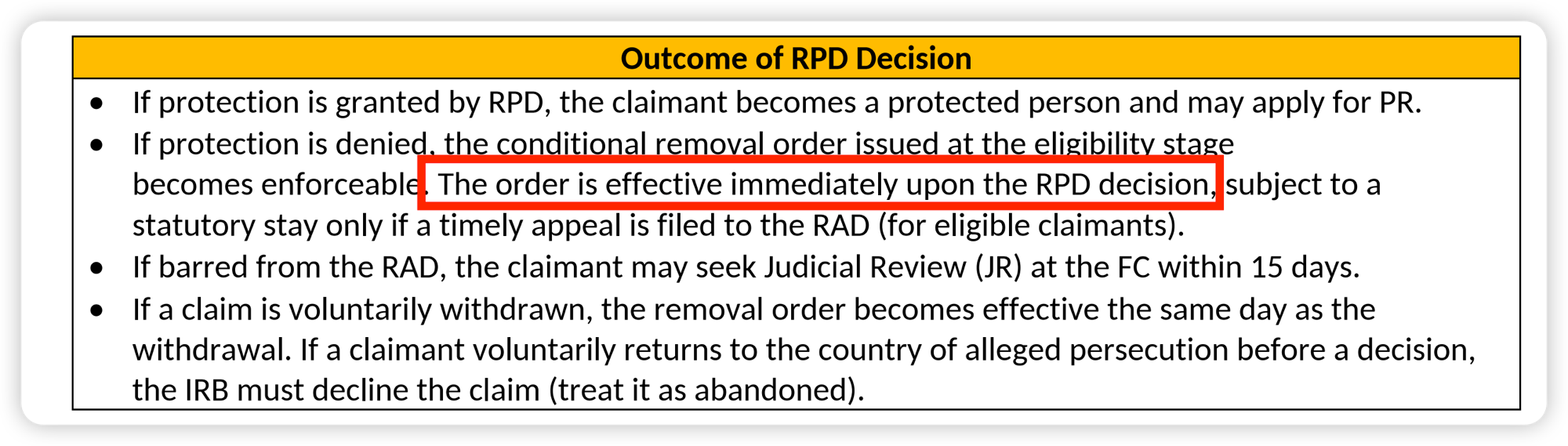
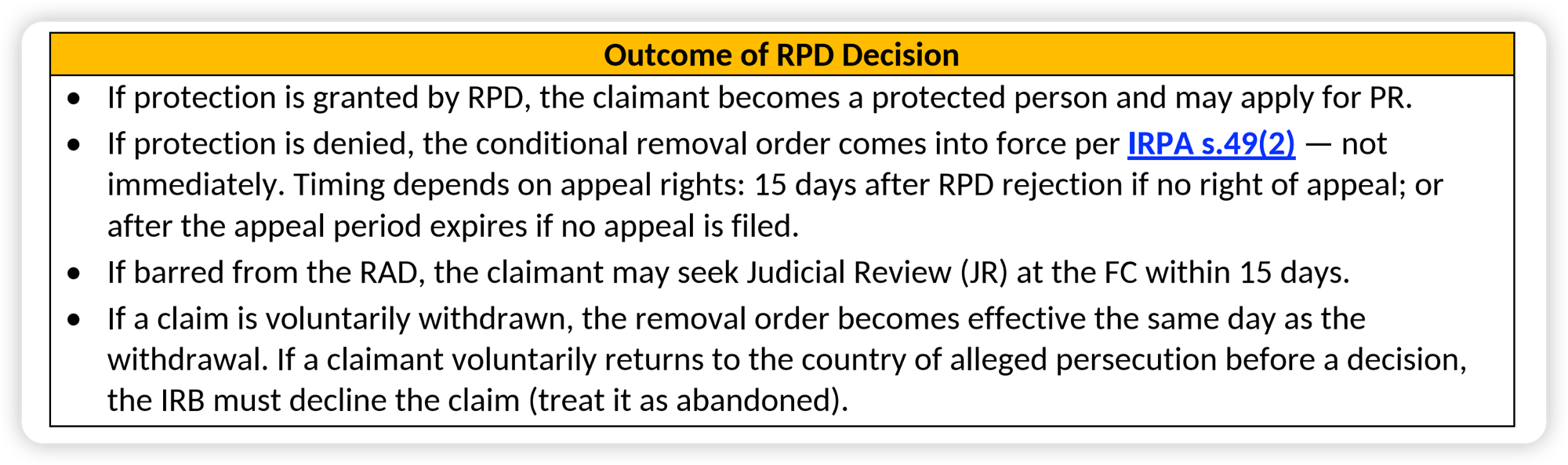
Update #s5 — Conditional Removal Order: "effective immediately" → comes into force per IRPA s.49(2)
Original Content
Updated Content
What Changed
"Effective immediately upon the RPD decision" is inaccurate. IRPA s.49(2) sets out when a conditional removal order comes into force — the timing is never immediate upon the RPD decision:
| Scenario | Order comes into force | Authority |
|---|---|---|
| RPD rejects — no right of appeal | 15 days after notice of rejection | s.49(2)(c) |
| RPD rejects — appeal right exists, but no appeal filed | The later of: day after appeal time limit expires, and 15 days after notice of rejection | s.49(2)(d) |
| RAD dismisses appeal | 15 days after notice of RAD rejection | s.49(2)(e) |
Update #s6 — Perfect the Record deadline: 75 Days → 120 Days
Original Text
Updated Text
Explanation
Effective June 26, 2026, the Federal Court Special Order grants applicants an extension of 90 days on top of the standard 30-day deadline under Rule 10(1) of the FCCIRPR. The total deadline to perfect an application for leave is therefore 120 days (30 Days standard + 90-Day Special Order extension). This supersedes the May 2025 Special Order, which had set the total at 75 days.
The Court cited an unprecedented caseload — projected to exceed 30,000 immigration filings in 2026 (nearly five times pre-pandemic levels) — as the reason for the further extension.
Source: Federal Court — Consolidated Immigration Practice Guidelines (August 12, 2026)
Update #s7 — eTA Expansion: Remove Qatar from visa-required country examples
Original Text
Updated Text
| Electronic Travel Authorization (eTA) |
|---|
|
Explanation
Qatar is a visa-exempt country, not a visa-required country.
Update #s8 — SOWP Table: rename "PA" to "Partner"; fix In-Canada Class trigger
Original Text
Updated Text
| The Spousal Open Work Permit (SOWP) | |||
|---|---|---|---|
| SOWP lets the spouse or partner (SOWP applicant) of an eligible worker, student, or PR applicant (their Partner) work in Canada on an open work permit. | |||
| Partner Category | Partner Requirement | Partner Permit Validity | Key Restriction |
| International Student | Doctorate (PhD) or Professional Degree (MD, JD, etc.) | Duration of study | Must be full-time; No SOWP if in the final term. |
| Master's Degree | ≥ 16 Months | Program duration must be at least 16 months. | |
| High-Skilled Worker | TEER 0 or 1 (All occupations) | ≥ 16 Months | Must be currently employed or have a job offer. |
| TEER 2 or 3 (Select Sectors Only) | ≥ 16 Months | Restricted to Healthcare, STEM, Trade, etc. | |
| Low-Skilled Worker | TEER 4 or 5 | ≥ 6 Months | Only eligible if Partner holds a PNP nomination certificate |
| PR Applicant | In-Canada Class (Spouse/Common-law) |
—— | Partner has valid status: AOR received. Partner's status expired: First Stage approval. |
| PNP Nominee (any TEER) | —— | PR application submitted; no AOR required |
|
Explanation
Two updates: "PA" is replaced with "Partner" throughout the table, and the In-Canada Class Key Restriction now correctly shows separate triggers for valid status (AOR) and expired status (First Stage approval).
Plus Only Updates
Update #p1 — Q46 Explanation: removal order type corrected from deportation order to exclusion order
Original Text
| Option | Original explanation |
|---|---|
| A | "Submitting a Temporary Resident Visa alone is insufficient after a deportation order." |
| D | "There is no automatic expiration of a deportation order after five years. Unlike an Exclusion Order, which expires after one or two years depending on the case, a deportation order is indefinite unless authorization is granted via ARC." |
Updated Text
| Option | Updated explanation |
|---|---|
| A | "Submitting a Temporary Resident Visa alone is insufficient after an exclusion order for misrepresentation." |
| D | "Under IRPR 225(3), a misrepresentation exclusion order carries a five-year re-entry bar, so the five-year period in option D is accurate. However, after five years, re-entry is not unconditional: Jin must still obtain a visa or eTA if required and meet all admissibility requirements at the port of entry. Since Jin wants to return now — three years into the five-year bar — the ARC requirement is still active." |
Note: The correct answer (C) remains unchanged. Only the explanation has been updated to more precisely identify the removal order type and the applicable provision.
Update #p2 — Q26 Correct Answer: updated from C to D
The correct answer for Q26 was incorrectly listed as C. The correct answer is D. The question and explanation are unchanged.
Note: The correct answer has been updated from C to D. The question and explanation are unchanged.
Update #p3 — Q68: Fix sentence completion date and Option B threshold
Original Text
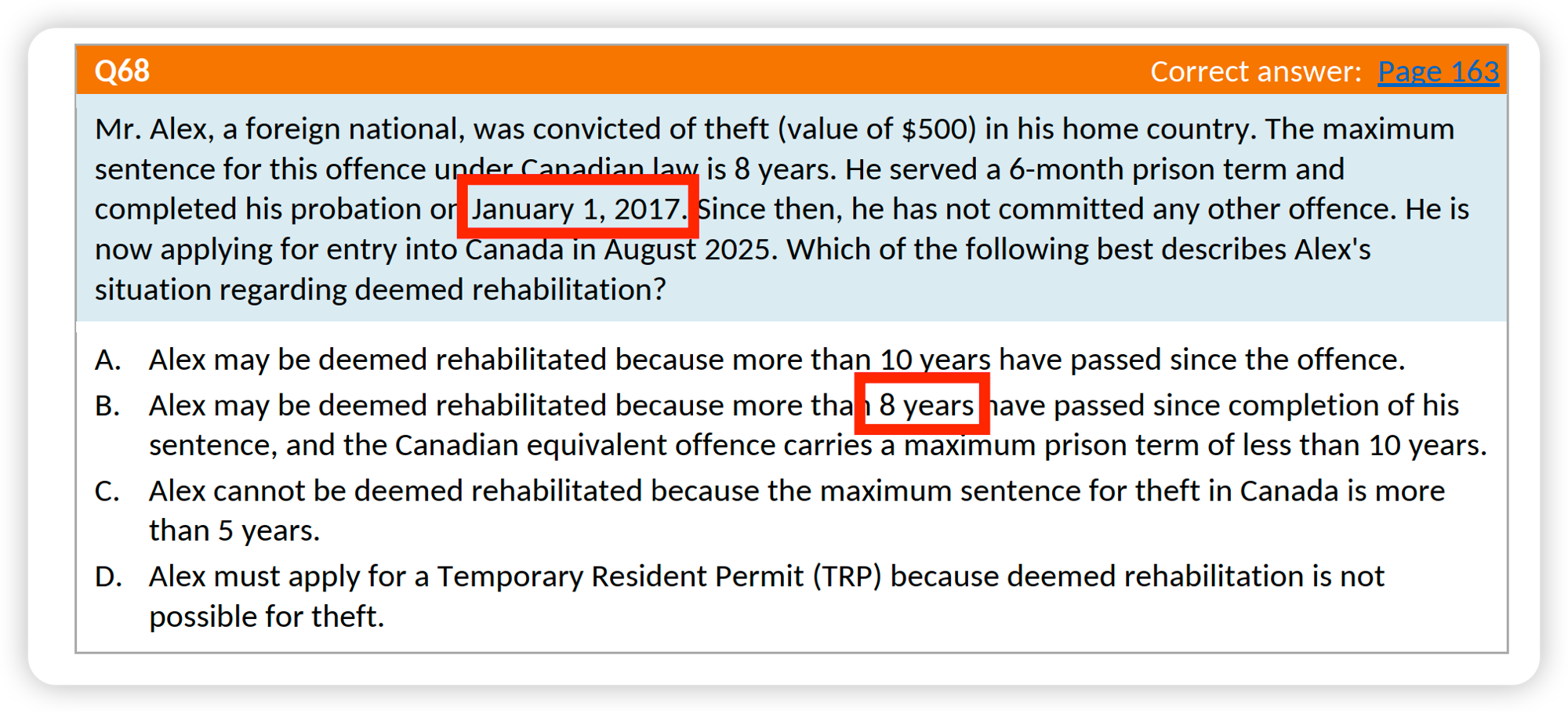
Updated Text
Mr. Alex, a foreign national, was convicted of theft (value of $500) in his home country. The maximum sentence for this offence under Canadian law is 8 years. He served a 6-month prison term and completed his probation on January 1, 2014. Since then, he has not committed any other offence. He is now applying for entry into Canada in August 2025. Which of the following best describes Alex's situation regarding deemed rehabilitation?
A. Alex may be deemed rehabilitated because more than 10 years have passed since the offence.
B. Alex may be deemed rehabilitated because more than 10 years have passed since completion of his sentence, and the Canadian equivalent offence carries a maximum prison term of less than 10 years.
C. Alex cannot be deemed rehabilitated because the maximum sentence for theft in Canada is more than 5 years.
D. Alex must apply for a Temporary Resident Permit (TRP) because deemed rehabilitation is not possible for theft.
Explanation
The sentence completion date and Option B's year threshold are corrected so Option B is now legally accurate. The correct answer remains B.
Note: The correct answer (B) remains unchanged.
Update #p4 — Q111: Revised question; correct answer updated from B to C
Original Text
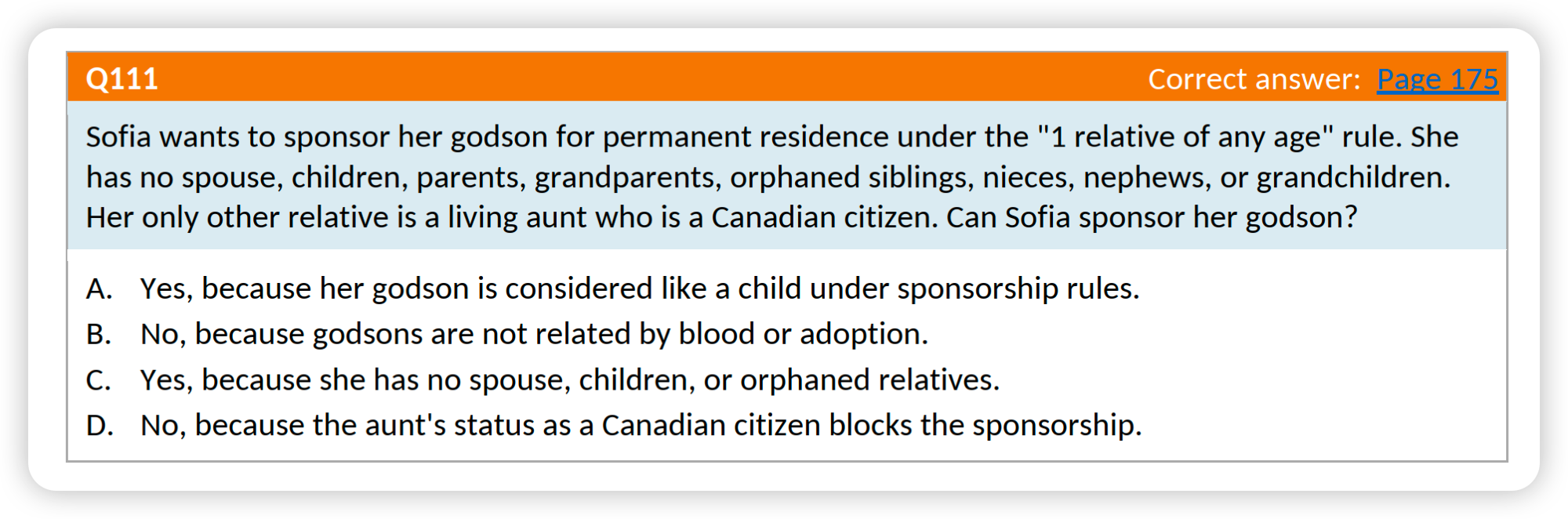
Updated Text
Sofia, a Canadian citizen living in Canada, wants to sponsor her adult cousin for permanent residence under the "1 relative of any age" provision. Sofia has no spouse or partner, children, parents, grandparents, siblings, nieces, nephews, or grandchildren. Other than the cousin she wishes to sponsor, her only living relative is an aunt who is a Canadian citizen living in Canada. Can Sofia sponsor her cousin under this provision?
A. Yes, because her cousin is related to her by blood and Sofia has no immediate family members she can sponsor.
B. Yes, because Sofia's aunt is already a Canadian citizen and therefore does not affect her ability to sponsor another relative.
C. No, because Sofia has an aunt who is already a Canadian citizen.
D. No, because cousins can never be sponsored as members of the family class.
Explanation
Under IRPR 117(1)(h), a sponsor must not have a relative — including an aunt or uncle — who is already a Canadian citizen, permanent resident, or registered Indian. Sofia's aunt (Canadian citizen) disqualifies her from the provision. Note that cousins are not automatically excluded: a cousin may be sponsored under s.117(1)(h) if all conditions are met.
Note: The correct answer has been updated from B to C.